


Strengthening Ontario’s Response to Gender-Based Violence
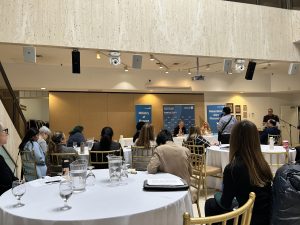
Ministry Of Finance Budget 2026 OAITH Submission
The Ontario Association of Interval & Transition Houses (OAITH) has officially submitted its recommendations for the 2026 Provincial Budget, outlining a critical roadmap to ensure the safety and long-term support of survivors across Ontario. Representing 90 organizations, OAITH is calling on the government to move beyond one-time investments toward a sustainable, system-wide approach to ending gender-based violence (GBV).
Key Strategies for Budget 2026
OAITH's submission highlights four primary pillars to stabilize the sector and better serve women and children:
Aligning with "Ontario STANDS": OAITH urges that all relevant government strategies align with Ontario's Action Plan to End Gender-Based Violence. This includes a requested $10 million investment to help over 100 organizations deliver locally-informed prevention programs.
Annual Funding Indexing: To combat rising operational costs—such as utilities, wages, and maintenance—OAITH is advocating for an annual 3% indexing to base funding for shelters. This would replace the need for "catch-up" lump sums and provide the financial certainty staff and survivors deserve.
Addressing the Housing "Bottleneck": A shelter system cannot function without a viable housing system. OAITH calls for increased investment in transitional housing operations and more affordable housing options to relieve the pressure on emergency shelters, which are currently forced to turn away thousands.
System-Wide Investment: The association is advocating for approximately $60 million to fund more beds, staff, and core programs across the province.
The Current Reality: A Sector Under Pressure
Recent survey data from OAITH members paints a stark picture of the challenges facing the sector:
High Demand: On average, shelters turned away 190 women and 68 children between April 2023 and March 2024.
Longer Stays: The average length of stay in a shelter has increased to 104 days, up from 80 days just two years prior.
Staffing Crisis: There is a 32% employee turnover rate, with 76% of those leaving citing compensation as the primary reason.
Funding Gaps: 90% of members must fundraise to cover the expenses of core programs primarily funded by the government.
"A shelter bed can be the only thing standing between safety and tragedy. But a shelter system is meaningless without a housing system." — Marlene Ham, Executive Director, OAITH
Looking Ahead
Investing in the stability of GBV organizations is an investment in the safety of every community in Ontario. OAITH remains ready to partner with the Ministry of Children, Community and Social Services (MCCSS) to ensure that the progress made so far is sustained for years to come.
New Courses and Resources in the GBV Training Hub!
Dec 18-2025: OAITH is launching a new course available for free to everyone in the GBV Training Hub
English: Safety Starts Here: Understanding Risk, Centering Survivors and Creating Safety Together
French: Sécurité d’abord: Comprendre les risques, centrer les survivantes et créer ensemble un environnement sûr
Create an account or log into the GBV Training Hub to complete this online self-moderated course and receive a certificate.
Learn more here about these new courses and resources HERE
Review all of our Course Outlines and discover your learning pathway with us!
Don't miss your chance to get updates - Subscribe here to get updates!
Killing of Women described as Femicide in 23% of local, national and TV news media reviewed in 2024-2025
As we finish out the 16 Days of Activism to End Gender-Based Violence, OAITH is releasing our Annual Media Analysis of the 2024-2025 Femicide Cases covered by local, national and TV sources. Beginning in 2016, hundreds of media articles and videos have been reviewed against the framing analysis developed to examine media content about femicide. The results using an interactive heat map highlight how the media are using positive and negative framing when reporting on femicides: https://bit.ly/OAITHMediaAnalysis20242025 The way femicides are framed in the media can serve as a mechanism to build awareness about gender-based violence and those reporting on these issues are uniquely positioned to work alongside us. These results tell a story, yet in very few cases do media ever provide any information about the services and supports that are available. Let's change that in 2026 because it could save a life. Safety Starts Here
Within the 2024-2025 Media Analysis, 114 cases were examined across 43 femicide cases
- 23% of cases were coded as labelling the case a femicide including naming the killing as intimate-partner violence related.
16 articles explicitly used the term femicide within their reporting this year, a notable increase compared to previous years.
- Despite positive shifts in naming femicide cases, few media reports (4%) included any information related to VAW/GBV help or local services.
The media can be a useful tool for increasing awareness and connection to local GBV services and the lack of included help info continues to be a gap in media reporting on femicide cases.
- Only 1% of cases (1) was coded as framing their article, or including language that may directly or indirectly blame the victim.
While this was a slight increase from last year’s media analysis it continues to be an improvement compared to the last five years.
- Although infrequently reported (87%), 15 cases did include information pertaining to previous criminal or violent histories.
A history of violence against the victim, or other women, is a key risk factor for further, at times lethal violence. The inclusion of this information within media reports not only supports data collection but can also serve as a powerful tool for awareness and public education.
November 2025 Femicide Reports:
Annual Femicide List 2024-2025
43 Women Killed: Femicide Cases Can Be Our Compass To Guide Change
43 Women Killed: Femicide Cases Can Be Our Compass To Guide Change
November 26th 2025- During the 16 Days of Activism to End Gender Based Violence, the Ontario Association of Interval Houses (OAITH) has released the Annual Femicide List 2024 2025 to educate the community about the realities of femicide. Over the last 52 weeks, there have been 43 women killed here in Ontario. There have been 101 charges reported by media, laid against 45 men accused in relation to these femicides, while another 3 cases were deemed a femicide-suicide.
"The headlines this past year continue to make public the heartbreaking stories of femicides that have occurred nearly every week in Ontario. Most of the men accused in these crimes were closest to them and most often women were killed in their home or another residence. Men’s violence against women this past year demands public attention to educate communities because we know femicide is preventable and change is possible” -Marlene Ham, Executive Director, Ontario Association of Interval & Transition Houses
Over the last year, femicide has left an impact on 29 communities across Ontario including Adjala-Tosorontio, Barrie, Bracebridge, Bradford, Brampton, Brantford, Cobourg, Guelph, Hamilton, Kingston, Leamington, Lincoln, London, Markham, Newcastle, Niagara Falls, Ottawa, Peterborough, Pickering, Sault Ste Marie, Shuniah, Simcoe, Sudbury, Thunder Bay, Timmins, Toronto, Tweed, Vaughan and Windsor.
OAITH has been tracking femicides in Ontario for 35 years, and we are aware of more than 1,120 victims of femicide whose lives have been taken and in most cases, by men who knew them. These numbers are a shocking reminder of the ongoing oppression, hatred, inequity, human rights violations and ongoing system failure that has led to these femicides.
Let there be justice for their families and that we all lean in to build a society that brings an end to all forms of gender-based violence and hatred because femicide is preventable.
Media Inquiries:
Marlene Ham, Executive Director
Help us cultivate safety by knowing the services available
mulberryfinder.ca
2024-2025 Annual Femicide List - Snapshot of Trends
43 Femicides of Women in a 52 Week Period
Victim and Accused Relationships
- 33% intimate partner femicides (14),
- 28% femicides perpetrated by family members (12),
- 16% femicides perpetrated by men known to the victim (7),
- 16% femicide cases where relationship details have not been provided (7) and
- 7% femicide cases where there was no prior relationship between the victim and perpetrator (3)
Location and Geography
- 79% of all femicide cases this year occurred either inside, or outside of a residence (34).
- 21% of femicide victims were killed in a rural or small population center (9).
- 26 communities across Ontario were affected by femicide
Victim Race
- Indigenous women (12%), Black women (7%), and South Asian women (12%) are overrepresented within Ontario femicide data
- 33% (14) of cases didn’t identify the race of the victim
Victim Age
- The youngest femicide victim was 20 years old and the oldest femicide victim, this year was 83 years old.
- No femicide victims were under the age of 18 were reported
- Nearly half (47%) of femicide victims were 55 years of age and older
Prior History of Violence and Charges of Accused
- 101 charges laid in relation to cases reviewed this year
- 45 men have been charged in relation to femicide cases this year
- 7% of cases of femicide-suicide where no charges have been laid (3)
- 12% of cases, a reported history of violence against the victim or other women has been identified through media reports
Access the 2024-2025 Annual Femicide List: bit.ly/AnnualFemicideList2024-2025
Learn more about We Count Femicide Because and OAITH’s Femicide Work:
https://www.oaith.ca/campaigns/femicide-reports/
Please note that there may be further changes/ revisions to the list made in the coming days.
How we Contextualize and Understand Femicide Prevention
- Responses to address gender-based violence (GBV) and femicide prevention must be broad in scope and apply to a range of victim perpetrator relationships and all types of gender-based violence.
- Access to safe, accessible and deeply affordable housing is a human right which affects every aspect of well-being, however many survivors experiencing violence face constant fear of violence while at home.
- Indigenous, Black and Racialized women experiencing violence have diverse, unique needs that are often overlooked in research, policy and practice–leading to increased barriers to gender-based violence support. Colonization, racial and cultural systemic violence lead to the invisibility of Indigenous and Black women within femicide discourse compounding both the risk of femicide and overall impacts of gender-based violence.
- Impacts of all forms of GBV compound as survivors age, ultimately accumulating throughout the life stages. Impacts of violence are also compounded by systemic oppression and intergenerational trauma (including residential schools), contributing to increased stigma for older women and additional barriers in accessing support. Despite this, GBV service and prevention is often focused only on younger women.
- Those experiencing gender-based violence in rural areas often face additional risks and barriers to support, including physical and social isolation, long distances between neighbours, lack of or no accessible transportation, limited services, lack of anonymity, animal and livestock responsibilities, and limited affordable housing.
- Criminal and family court systems need to improve how they respond by centering survivor and child safety. Working alongside survivors and gender-based violence community based organizations on risk assessment, risk management and monitoring of those who are causing harm can be the difference between life and death. Without survivor safety at the centre, the system inevitably fails.
Embrave's 13th Annual Steps to End Violence
Event Date: February 17, 2026
Start Time: 9:30 AM
End Time: 1:00 PM
Type of Event: Fundraiser
Contact Name: Monica Vu-Boukayli
Contact Email: monicav@embrave.ca
All ages welcome
 Embrave: Agency to End Violence (formerly known as Interim Place) invites you to:
- Register your team and set a fundraising target to raise funds to support survivors!
- Engage your community to raise critical funds for Embrave!
- Make your move in your community or join us on Sunday August 24th!
Together we will make our move on Sunday August 24th, 2025 at 9:30 AM at J.C. Saddington Park.
If you're not able to join us in person on August 24th, you can still walk, bike, or roll in your community! (Make sure to send us a photo so we can share it!)
Embrave is excited to bring back our in-person event! All those registered for the event are invited to join us for the family-friendly event including speakers, walk, vigil ceremony, lunch and children's activities.
We walk to raise awareness about the issue of gender-based violence and to remember those who have lost their lives to an act of violence. All funds raised at this event will directly support Embrave’s work in providing shelter, support, counselling, & advocacy for survivors of gender-based violence in our community. All funds raised at this event will directly support Embrave’s work in providing shelter, support, counselling, and advocacy for survivors of gender-based violence in our community.
We hope you can join us in taking steps to end gender-based violence! Visit our event website to register as an individual or a team! Join us for a scenic walk right by the water followed by lunch and family-friendly activities. Kids and pups are all welcome!
OAITH Press Releases
Follow this link to read OAITH's Press Releases.
OAITH Releases New 5 Year Strategic Plan
OAITH is pleased to introduce our five-year strategic plan to our members, ally organizations, partners and supporters who have worked alongside us.
With all levels of government invested in addressing gender-based violence (GBV) through the implementation of a National Action Plan to End Gender-Based Violence, we stand united to improve outcomes for survivors. OAITH is rooted in our commitment to working with our members and ally organizations as you deliver a broad range of services to survivors, their families and your broader community.
The Strategic Plan Includes:
- OAITH Member Profile
- Approach
- Engagement Journey
- Vision & Mission
- Values and Guiding Principles
- Strategic Priorities
Access the Strategic Plan:
Deputation to Ministry of Finance on Budget 2025
Good Morning,
My name is Marlene Ham and I work as the Executive Director at the Ontario Association of Interval and Transition Houses.
First I would like to thank the government for the collaboration with OAITH and our members over the last number of years with investments throughout the pandemic and more recently through Ontario STANDS. Your support of our primary campaign Wrapped in Courage always delivers impact and leaves us with hope that we can create a better future together.
I am here today however because I want to work with the government to find a way for these organizations to move from surviving to thriving. In 2019 I began talking and presenting to the government that the shelters were experiencing a bottleneck crisis. I am sure you can imagine how much more difficult this has actually become. The unintended consequence for survivors is they must stay longer in shelters. The longer people stay, the more others have to be turned away to other services, possibly leaving them in danger and contributing to the risk of femicide in your community.
This is not the system that was designed to support survivors of gender-based violence. Unfortunately after decades of under-funding, no affordable housing and an increasing population, this is what we’re left with.
I wanted to share a few highlights from our Provincial Budget Survey so that this government can understand the barriers and the importance of investing into your existing services. A full submission will be provided to the Ministry of Finance.
60 Million Can Solve Problems and Move to Solutions
- There is capacity within the system to provide more beds-they just need the funding to do so. Money used in this way will instantly serve more and improve the safety of survivors and their children.
- Nearly 85% of participating shelters were hiring on the date they filled in the survey
- Shelters have a precarious workforce with 40% of them being contract, relief and part time workers and nearly 60% are indicating a relief shortage.
- There is a significant pay disparity with no base rate of pay that exists in the sector.
- Fundraising to pay hydro and health benefits isn’t sustainable AND not having shelter and the numerous outreach programs they provide isn’t feasible for our communities-we need to collaborate on the solution.
- More than 30 % of our members operate second stage and transitional housing, however more could be developed if you reduce the red tape, costly application requirements and ensure there is operational funding.
- 75% have indicated they must fundraise for core programs.
- Increased expenditures are being reported for insurance, health benefits and cyber insurance while IT costs now represent 10% of their budgets with no dedicated funding for this.
Despite all of these challenges one of our members describes their success this past year by saying:
“Our team has assisted women and children with some of the most complex files we have ever dealt with that touch every system from family and criminal court, mental health and addictions, child protection, education and developmental services. Increasingly, doors are being closed in our faces as we have fewer and fewer options for women in the legal system, the housing system and healthcare and still our team delivers positive change for women.”
I hope that budget 2025 will deliver for them too.
Thank you for your time
OAITH submits recommendations to the Ministry of Finance
OAITH has submitted our recommendations to the Ministry of Finance and presented them to the Standing Committee on Finance and Economic Affairs for Provincial Budget 2024.
To learn more about our recommendations:
Submission to Ministry of Finance
Deputation to the Standing Committee on Finance & Economic Affairs
OAITH Submits Policy Brief to Justice Canada on Coercive Control
On October 13th, OAITH submitted a policy brief to Justice Canada focused on exploring alternatives to the criminalization of coersive control. Read the full text here.
OAITH Lays out Key Priorities Needed for the 2023 Provincial Budget
OAITH has made a submission to the Ministry of Finance and the Standing Committee on Finance & Economic Affairs focusing on 10 key priorities to improve survivor safety and the quality support they deserve through a 60 Million Dollar investment. OAITH will be sure to measure how Budget 2023 is responsive to our recommendations and the value placed on creating safety and justice for survivors of gender-based violence and those working to end gender-based violence in Ontario.
OAITH Submission to Ministry of Finance on Budget 2023
OAITH Deputation to Standing Committee on Finance & Economic Affairs
New AR/AO Framework and Curriculum Now Available!
OAITH is pleased to announce a new course is now available within the OAITH Training Hub!
Developed in collaboration with Nicole Bernhardt and Annelies Cooper of NSB Consulting, "Taking Action in Our Spheres of Influence: Intersectional Anti-Racism and Anti-Oppression Gender-Based Violence" will assist learners in:
- building an anti-racism and anti-oppression approach within their own spheres of influence;
- recognizing positionality and developing personal accountability strategies;
- creating racially equitable environments and discussing racial microaggressions;
- establishing institutional policies and practices that promote anti-racism and anti-oppression, such as collecting demographic data and shifting organizational culture; and
- connecting with community-based anti-racism and anti-oppression efforts
This course was created to supplement a new resource now available in the OAITH Resource Library: "Taking Action in Our Spheres of Influence: An Intersectional Anti-Racism and Anti-Oppression Gender-Based Violence Framework."
Access the Course Outline via: https://bit.ly/ARAOCourseOutline
See the full list of OAITH Courses: https://www.oaith.ca/train/current-courses.html
OAITH Highlights Impacts of U.S. Supreme Court Decision
June 24th, 2022 will go down in history as a dark day for women everywhere.
Today's landmark decision will have catastrophic effects on the lives and rights of women across and beyond the United States, in particular, survivors of gender-based violence. We stand with those hearing the news of the U.S Supreme Court overturning Roe vs. Wade in shock, horror, and in deep disappointment. It is unthinkable that after fifty years of women having the right to make decisions about their own bodies, the Constitution no longer guarantees the right to an abortion in the United States.
Reproductive rights are women's rights. Women's rights are human rights. The right to choose is an essential protection as we move towards structural gender equity. In the words of Ruth Bader Ginsburg "Abortion prohibition by the state…denies them full autonomy and full equality with men."
As a result of this decision, access to abortions will be limited for the most marginalized communities in society, including Indigenous and Black women, women living in poverty, women who are precariously employed, women with disAbilities and for those living in rural and remote communities. The denial of reproductive rights through this decision marks another act of gender-based violence enacted upon women that will ultimately hinder the efforts of the last fifty years towards gender equality. As Indigenous, Black and racialized women, women with disabilities, gender-diverse individuals and girls continue to experience disproportionate rates of gender-based violence, they too will be disproportionately impacted by this decision. Historically, Black women, Indigenous women and women with disAbilities have been subject to state violence and have been denied reproductive rights, including through forced reproduction and coerced sterilization. Today, Black and Indigenous women continue to face barriers to accessing safe healthcare. Additionally, the voices of gender-diverse communities are so often silenced within discussions surrounding reproductive rights.
We feel the grief of feminist, reproductive, and human rights activists and the women that will be most impacted, and we stand beside those committed to resistance and action in the face of this devastating decision.